







 21% THCa
Stuck doing post-gummy math? If you’re staring down a drug test, or simply want to plan for one down the line, you might find yourself asking, how long does weed stay in your system? The short answer is: it depends. That’s because the timeframe has just as much to do with how often you consume cannabis and your body’s own chemistry as it does with the date you last partook. Below, we’ll break down these variables and give you some estimates.
How Long Does THC Stay in Your System
It might sound surprising, but a standard urine test isn’t actually looking for THC at all. When our bodies break down a chemical substance, they produce a different chemical substance—or metabolite. The inactive metabolite that’s produced after consuming cannabis is called THC-COOH. That’s what the test will detect.
The rates at which this happens can vary because THC is highly lipophilic. Or, in simpler terms, it is readily stored in fatty tissue. This means that while the effects of THC typically wear off in a matter of hours, stored THC can be released gradually over time. As it makes its way into the bloodstream, your body will continue to metabolise it and produce THC-COOH. (Huestis, 2007).
The Numbers
While there are general trends related to the amount of time weed will show up with different tests, there isn’t a precise date when cannabis is guaranteed to leave your system. The type and sensitivity of the test, plus the person’s pattern of use, can influence results.
That said, more often than not, the range for detection from a urine test, or urinalysis (UA), is between three and 30 days. One-time use will fall at the lower end of the spectrum, while daily, chronic use will fall at the other end.
In short, the amount you consumed on one occasion doesn’t tell the whole story. Factors such as how often you use cannabis and body composition can matter. This is because THC is a lipophilic compound, meaning it can accumulate in body fat and be released slowly, even after you’ve long since snuffed the joint out. (Substance Abuse and Mental Health Services Administration [SAMHSA], 2025).
By looking at four common types of cannabis tests, their detection windows, and the factors that make these windows shorter or longer, this guide helps answer the question: how long does weed stay in your system? Still, the information provided here is not a guarantee that your test will turn out one way or another. However, it can provide you with some rough estimates.
This information is for general education only and is not medical or legal advice
THC vs. THC-COOH: What Weed Drug Tests Actually Look For
Once THC enters your body, it begins a metabolic journey that has little to do with how high you feel. Whether inhaled or ingested, THC is metabolised primarily in the liver (hepatic metabolism), first becoming 11-OH-THC, an active metabolite, and then THC-COOH, an inactive metabolite that can linger in the body long after the effects have worn off. (Huestis, 2007).
THC-COOH has no psychoactive effect whatsoever, meaning its presence in a urine test only indicates previous cannabis exposure—not that you are currently impaired. The way that distinction is treated in employment and legal settings can vary by jurisdiction, policy, and circumstance.
The Cutoff
There is another important piece of the puzzle: the cutoff. An “immunosary cutoff” is the threshold used by antibody-based screening tests (immunoassays) to determine whether a substance or its metabolite is present at a level high enough to produce a positive result. In the United States, the immunoassay cutoff for marijuana metabolites is 50 ng/mL; as such, anything below 50 ng/mL is considered negative.
Some laboratories and non-federal testing programs use lower cutoffs, including 20 ng/mL. Confirmatory testing, which we’ll cover below, uses a15 ng/mL cutoff (SAMHSA, 2026). In other words, the same urine sample could be positive in one test and negative in another.
Initial vs. Confirmatory Testing
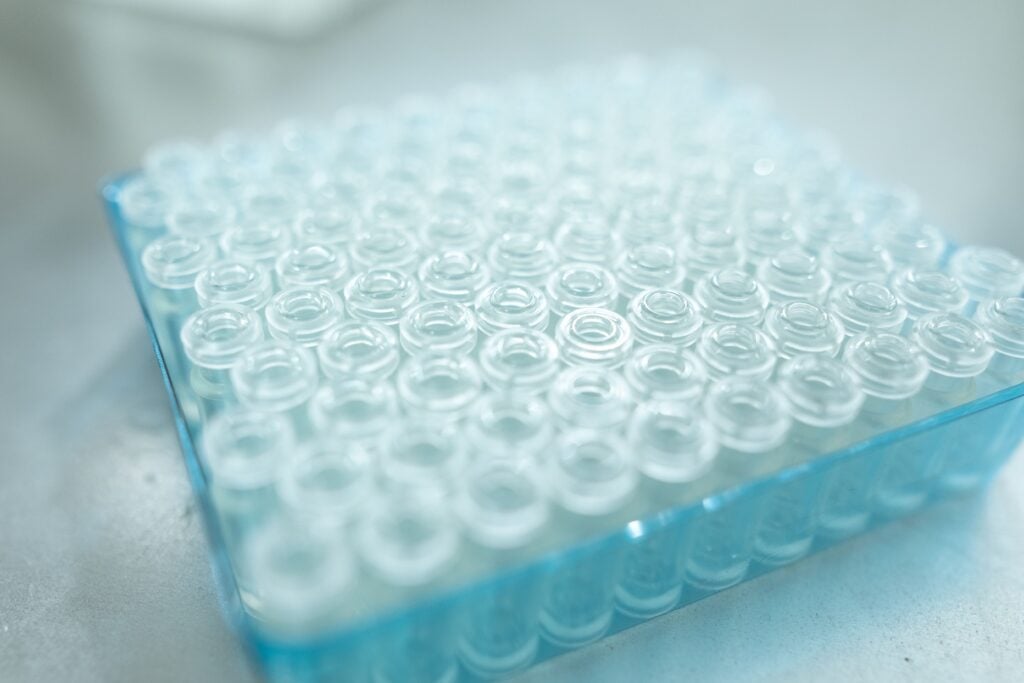
In U.S. federal workplaces, drug screening will begin with an initial test—typically, an immunoassay. This test uses antibodies to detect a specific drug or its metabolite in a sample. Immunoassays are fast, relatively inexpensive, and cast a wide net. However, immunoassays can cross-react with other compounds and produce false positives. This doesn’t mean they will—just that it’s possible. For this reason, positive tests undergo confirmatory testing.
This second step often involves a more specific approach. Because confirmatory testing is more specialized, laboratories generally reserve it for samples that screen positive, rather than running it on every sample.
Typically, this additional test uses a mass-spectrometry method, such as gas chromatography-mass spectrometry (GC-MS) or liquid chromatography-tandem mass spectrometry (LC-MS/MS). These methods both identify specific drugs or metabolites more precisely than immunoassays (Krasowski et al., 2018; McMillin et al., 2018; Substance Abuse and Mental Health Services Administration [SAMHSA], 2025).
Note: Although the typical workflow is immunoassay followed by mass-spectrometric confirmation, some laboratories use mass spectrometry directly for urine drug testing, bypassing the initial immunoassay screen (Krasowski et al., 2018).
Helpful Weed Testing Terms
Cutoff: the concentration threshold used to determine whether a test is reported as positive or negative. Initial testing: the first stage of testing, which commonly uses an immunoassay to screen a sample for a specific drug or metabolite.
ng/mL: nanograms per millilitre, the unit used to measure the concentration of a substance in a sample. In the context of weed testing, it refers to the concentration of the THC metabolite THC-COOH in a urine sample.
Confirmatory testing: a more specific type of test used to verify a presumptive positive result.
How long does weed stay in your system for urine?
For most people asking how long weed stays in their system, the real question is: How long could a urine test detect it? The answer depends heavily on how often you use cannabis.
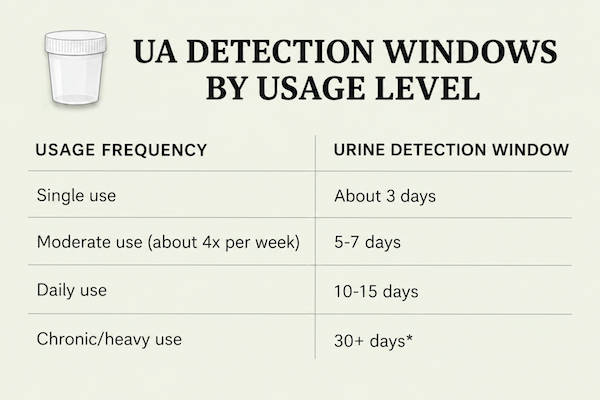
*Documented outliers have remained detectable for more than 60–70 days.
These are population-level ranges drawn from published research, not guarantees for any one person. Some heavy cannabis users may remain urine-test positive considerably longer. In one supervised-abstinence study of 86 chronic cannabis users, cannabinoid tests remained positive for up to 46 consecutive days. Some participants took up to 77 days to produce 10 consecutive urine samples below the study’s 20 ng/mL cutoff (Ellis et al., 1985).
Why urine tests, or UAs, are so common
Urine is the most widely used testing method because it is inexpensive, well established, and has a relatively long detection window. It can detect THC-COOH after the effects of cannabis have long since worn off, making it useful for identifying past exposure but not for determining whether someone is currently impaired.
You may also hear about dilution. Drinking excessive amounts of fluid can produce an unusually dilute urine sample, but laboratories check measures such as creatinine and specific gravity to identify if the sample itself is diluted. A sample that is too dilute may be reported as invalid or require another specimen. In this sense, there is no reliable way to turn dilution into a predictable negative result.
How long does weed stay in your system after a couple of puffs?
If you rarely or never use cannabis, a small exposure will generally clear faster than repeated use. Controlled studies of infrequent users have found relatively short urine detection windows after single doses, although the exact result varies depending on the dose, test cutoff, and the individual.
What about secondhand smoke?
Generally, casual exposure to secondhand marijuana smoke in a ventilated area will not cause a person to fail a drug test, as trace metabolite levels stay well below standard screening thresholds and clear the system within 24 hours (Cone et al., 2015). However, extreme enclosed exposure like hotboxing can cause a bystander to absorb enough THC to generate detectable metabolites above standard workplace testing cutoffs for 24 to 48 hours following the event (Cone et al., 2015; Herrmann et al., 2015).
Blood, Saliva, and Hair Tests: Detection Windows Compared
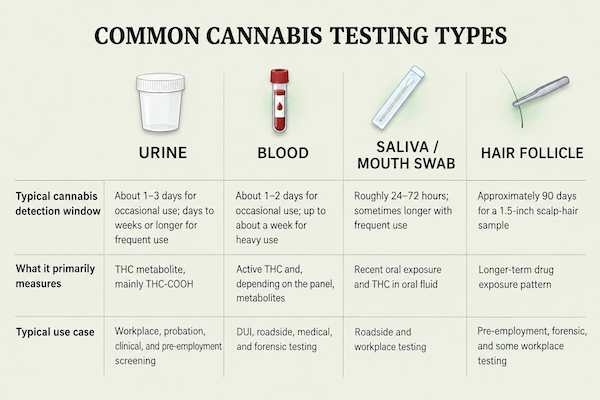
THC can appear differently on various tests. Below, we go over the general timeframes for blood, saliva, and hair follicle tests.
How long does weed stay in your system on a blood test?
in blood within minutes of inhalation and generally clears relatively quickly. A practical estimate is about 1–2 days for occasional use and up to roughly a week for frequent or heavy use, although timing varies by dose, frequency of use, metabolism, and the laboratory’s testing threshold.
Blood testing measures active THC more directly than urine testing, so it is most often associated with impairment investigations, roadside stops, and DUI cases. However, blood tests for THC do not reliably establish impairment in the way blood alcohol concentration can for alcohol. According to the American Bar Association, “while blood alcohol content (BAC) level represents an accurate measurement of alcohol impairment, the presence of THC in a driver’s body has not been shown to be a predictable measure of cannabis impairment.”
The relationship between THC concentration and driving impairment remains contested in scientific and legal settings (American Bar Association, 2016).
How long does weed stay in your system with a saliva / mouth swab test?
Saliva, also called oral-fluid or mouth-swab testing, generally has one of the shortest cannabis detection windows: roughly 24–72 hours, though THC may be detectable longer after frequent or heavy use. Because oral fluid tends to reflect recent exposure, it is increasingly used in roadside and workplace testing.
SAMHSA finalized federal Mandatory Guidelines for Oral Fluid Drug Testing Programs in 2023, making oral fluid an authorized specimen type for federal workplace testing programs (Substance Abuse and Mental Health Services Administration [SAMHSA], 2023).
How long does weed stay in your system on a hair test?
Hair testing has the longest typical detection window: approximately 90 days when the laboratory analyzes the 1.5 inches of hair closest to the scalp (Gryczynski et al., 2014). It is generally used to identify longer-term patterns of exposure rather than recent use or current impairment. However, results can be complicated by external contamination and drug-specific differences in hair incorporation associated with pigmentation.
Cannabinoids can reach hair through smoke, contaminated surfaces, or transfer from people who use cannabis, potentially producing a positive result without cannabis consumption (Moosmann et al., 2015). Research also suggests that melanin content in hair can affect measured concentrations of some drugs. In a controlled codeine study, participants received identical doses, yet those with black hair had substantially higher codeine concentrations than participants with brown, blond, or red hair. At a proposed uniform 200 pg/mg cutoff, all participants with black hair would have tested positive, compared with half of those with brown hair and none with blond or red hair (Rollins et al., 2003).
Comparable THC-COOH research is limited. One study of documented cannabis users found no statistically significant difference in THC-COOH detection or concentration between African American and Caucasian participants (Huestis et al., 2007). Still, evidence of pigmentation-associated differences for other drugs remains relevant because the relationship between THC-COOH concentration and hair pigmentation is not yet fully understood.
Concerns about disparate outcomes in hair testing have led to litigation. In Jones v. City of Boston, Black police officers and cadets tested positive for cocaine at approximately 1.3% over eight years, compared with just under 0.3% for white officers and cadets. In 2014, the First Circuit held that the plaintiffs had presented sufficient statistical evidence to establish a prima facie showing of disparate racial impact under Title VII (Jones v. City of Boston, 2014).
How Long Does Cannabis Stay in Your System?
How long cannabis remains detectable depends much more on how often and how much you use than on any quick fix. Test type, dose, product potency, route of use, body composition, metabolism, and individual biology can all affect the timeline.
Frequency of use: This is usually the biggest factor. With frequent or chronic use, THC and its metabolites can accumulate and be released more gradually over time. Occasional use generally produces a shorter detection window.
Body composition: THC is lipophilic, meaning it readily distributes into fatty tissue. Differences in body composition can therefore affect how long metabolites remain detectable. This is only one factor, though, and it cannot predict an individual person’s result on its own.
Metabolism and genetics: People process THC at different rates. Variations in the CYP2C9 gene, an enzyme involved in THC metabolism, have been associated with differences in THC processing and exposure. One pharmacogenetic analysis found that reduced-function CYP2C9
variants can alter the formation and clearance of THC metabolites (Gasse et al., 2020).
Potency and dose: Products with more THC deliver a larger cannabinoid dose, which may extend detection times. Cannabis flower has become substantially more potent over time: analysis of U.S. DEA seizure data found average THC concentrations increased from about 4% in 1995 to about 12% in 2014, while later monitoring found averages near 14% in 2019 (ElSohly et al., 2016; ElSohly et al., 2021). This means older detection-window studies may not perfectly reflect exposure from many current high-potency products.
Route of administration: Smoking or vaping delivers THC rapidly through the lungs. Edibles take longer to take effect because THC is processed through the liver first, producing a different balance of metabolites and a longer-lasting subjective effect. These differences can affect blood levels and metabolite patterns, although frequency of use and total dose still matter most.

Getting Weed Out of Your System: Common Myths
Time is the only reliable way your body clears THC and its metabolites. Heavy hydration and exercise do not work, and trying to alter or substitute a sample can carry serious consequences in employment, medical, probation, or legal contexts.
Exercise: Exercise is not a dependable way to speed clearance. In a small study of regular cannabis users, exercise produced a small but statistically significant rise in plasma THC, likely related to the release of stored THC from fat tissue (Wong et al., 2013).
Hydration: Drinking large amounts of water may temporarily dilute urine, but it does not remove THC metabolites. Excessively diluted urine may be flagged as a dilute or invalid sample rather than producing a reliable negative result. Drinking too much water can also be dangerous because it can lower blood sodium levels (Mayo Clinic, 2025).
Time is the only reliable mechanism by which the body clears THC and its metabolites.
A Closing Note
Cannabis detection windows are ranges, not deadlines. They vary based on the test used, dose, product potency, metabolism, and, most importantly, how often you use cannabis. This article is for general educational purposes only and is not medical or legal advice; if a drug-test result could affect your job, treatment, driving privileges, or legal status, speak with a qualified healthcare professional, testing provider, or legal professional.
For related information, visit our cannabis education hub, learn more about the endocannabinoid system, or if you’re looking to shift your attention away from THC, explore our high-CBD strains.
FAQs
For someone who rarely uses cannabis, a small amount may be detectable in urine for roughly one to three days. But there is no guaranteed timeline: dose, test cutoff, metabolism, and any prior regular use all matter. If you have used regularly in the past, even a light session does not reset your detection window to the “single-use” range.
For a daily or long-term user, urine detection can extend for several weeks after stopping. Studies have documented detectable cannabinoid metabolites beyond 30 days, and some participants have remained positive for considerably longer. Clearance is gradual, not an on/off switch: levels generally decline over time until they fall below a test’s cutoff.
CBD itself is not what standard cannabis drug tests target. A pure CBD isolate should not produce a THC-positive result. However, CBD products can contain THC, and some mislabeled or poorly regulated products may contain more than their label suggests (Bonn-Miller et al., 2017). Even low-THC CBD-dominant cannabis products have produced positive urine results in controlled research (Spindle et al., 2021).
Under ordinary conditions, it is very unlikely. In a controlled study, however, nonsmokers in an extremely smoky, unventilated room sometimes produced positive urine results. The same study found no positives among people exposed in a ventilated room (Cone et al., 2015).
Oral-fluid, or mouth-swab, testing generally has one of the shortest cannabis detection windows. A useful rule of thumb is about 24 to 72 hours, although heavy or frequent use and the testing method can extend detectability. Oral-fluid THC concentrations peak soon after use and decline relatively quickly, which is why these tests are often used when recent exposure is the focus.
References
Huestis, M. A. (2007). Human cannabinoid pharmacokinetics. Chemistry & Biodiversity, 4(8), 1770–1804. https://doi.org/10.1002/cbdv.200790152
Substance Abuse and Mental Health Services Administration. (2025). Medical review officer guidance manual for federal workplace drug testing programs. U.S. Department of Health and Human Services. https://www.samhsa.gov/sites/default/files/mro-guidance-manual-2025.pdf
Substance Abuse and Mental Health Services Administration. (2026). Mandatory guidelines for federal workplace drug testing programs: Authorized testing panels. Federal Register. https://www.federalregister.gov/documents/2026/03/13/2026-04981/mandatory-guidelines-for-federal-workplace-drug-testing-programs-authorized-testing-panels
Krasowski, M. D., McMillin, G. A., Nichols, W. L., & Waller, K. V. (2018). A difficult challenge for the clinical laboratory: Accessing and interpreting manufacturer cross-reactivity data for immunoassays used in urine drug testing. The Journal of Applied Laboratory Medicine, 3(4), 605–616. https://doi.org/10.1373/jalm.2018.026948
McMillin, G. A., Slawson, M. H., & Johnson-Davis, K. L. (2018). A practical guide to urine drug monitoring. Federal Practitioner, 35(4), 22–27. https://pmc.ncbi.nlm.nih.gov/articles/PMC6368048/
Ellis, G. M., Jr., Mann, M. A., Judson, B. A., Schramm, N. T., & Tashchian, A. (1985). Excretion patterns of cannabinoid metabolites after last use in a group of chronic users. Clinical Pharmacology & Therapeutics, 38(5), 572–578. https://doi.org/10.1038/clpt.1985.226
Cone, E. J., Bigelow, G. E., Herrmann, E. S., Mitchell, J. M., LoDico, C., Flegel, R., & Vandrey, R. (2015). Non-smoker exposure to secondhand cannabis smoke: I. Urine screening and confirmation results. Journal of Analytical Toxicology, 39(1), 1–12. https://doi.org/10.1093/jat/bku116
Herrmann, E. S., Cone, E. J., Mitchell, J. M., Bigelow, G. E., LoDico, C., Flegel, R., & Vandrey, R. (2015). Non-smoker exposure to secondhand cannabis smoke II: Effect of room ventilation on the physiological, subjective, and behavioral/cognitive effects. Drug and Alcohol Dependence, 151, 194–202. https://doi.org/10.1016/j.drugalcdep.2015.03.019
American Bar Association. (2016). Testing challenges: No BAC for THC. https://www.americanbar.org/groups/judicial/resources/highway-justice/testing-challenges-no-bac-thc/
Substance Abuse and Mental Health Services Administration. (2023). Mandatory guidelines for federal workplace drug testing programs using oral fluid. Federal Register. https://public-inspection.federalregister.gov/2023-21735.pdf
Gryczynski, J., Schwartz, R. P., O’Grady, K. E., Restivo, L., & Mitchell, S. G. (2014). Hair drug testing results and self-reported drug use among primary care patients with moderate-risk illicit drug use. Drug and Alcohol Dependence, 141, 44–50. https://doi.org/10.1016/j.drugalcdep.2014.05.003
Moosmann, B., Roth, N., & Auwärter, V. (2015). Finding cannabinoids in hair does not prove cannabis consumption. Scientific Reports, 5, Article 14906. https://doi.org/10.1038/srep14906
Rollins, D. E., Wilkins, D. G., Krueger, G. G., O’Neal, C., Crouch, D. J., Rollins, D. E., & Huestis, M. A. (2003). The effect of hair color on the incorporation of codeine into human hair. Journal of Analytical Toxicology, 27(8), 545–551. https://doi.org/10.1093/jat/27.8.545
Huestis, M. A., Gustafson, R. A., Moolchan, E. T., Barnes, A., Bourland, J. A., Sweeney, S. A., Hayes, E. F., Carpenter, P. M., & Smith, M. L. (2007). Cannabinoid concentrations in hair from documented cannabis users. Forensic Science International, 169(2–3), 129–136. https://doi.org/10.1016/j.forsciint.2006.09.006
Jones v. City of Boston, 752 F.3d 38 (1st Cir. 2014). https://caselaw.findlaw.com/court/us-1st-circuit/1665635.html
Gasse, A., Vennemann, M., Köhler, H., & Schürenkamp, J. (2020). Toxicogenetic analysis of Δ9-THC-metabolizing enzymes. International Journal of Legal Medicine, 134(6), 2095–2103. https://doi.org/10.1007/s00414-020-02380-3
ElSohly, M. A., Mehmedic, Z., Foster, S., Gon, C., Chandra, S., & Church, J. C. (2016). Changes in cannabis potency over the last two decades (1995–2014): Analysis of current data in the United States. Biological Psychiatry, 79(7), 613–619. https://doi.org/10.1016/j.biopsych.2016.01.004
ElSohly, M. A., Chandra, S., Radwan, M., Majumdar, C. G., & Church, J. C. (2021). A comprehensive review of cannabis potency in the United States in the last decade. Biological Psychiatry: Cognitive Neuroscience and Neuroimaging, 6(6), 603–606. https://doi.org/10.1016/j.bpsc.2020.12.016
Wong, A., Montebello, M. E., & Norberg, M. M. (2013). Exercise increases plasma THC concentrations in regular cannabis users. Drug and Alcohol Dependence, 133(2), 763–767. https://doi.org/10.1016/j.drugalcdep.2013.07.031
Mayo Clinic. (2025, July 18). Hyponatremia: Symptoms and causes. https://www.mayoclinic.org/diseases-conditions/hyponatremia/symptoms-causes/syc-20373711
Bonn-Miller, M. O., Loflin, M. J. E., Thomas, B. F., Marcu, J. P., Hyke, T., & Vandrey, R. (2017). Labeling accuracy of cannabidiol extracts sold online. JAMA, 318(17), 1708–1709. https://doi.org/10.1001/jama.2017.11909[pmc.ncbi.nlm.nih][pubmed.ncbi.nlm.nih]
Cone, E. J., Bigelow, G. E., Herrmann, E. S., Mitchell, J. M., LoDico, C., Flegel, R., & Vandrey, R. (2015). Non-smoker exposure to secondhand cannabis smoke. I. Urine screening and confirmation results. Journal of Analytical Toxicology, 39(1), 1–12. https://doi.org/10.1093/jat/bku116[pubmed.ncbi.nlm.nih][academic.oup]
Spindle, T. R., Cone, E. J., Schlienz, N. J., Mitchell, J. M., Bigelow, G. E., Flegel, R., Hayes, E., & Vandrey, R. (2021). Urinary pharmacokinetic profile of cannabidiol (CBD), Δ9-tetrahydrocannabinol (THC) and their metabolites following oral and vaporized CBD formulation administration. Journal of Analytical Toxicology, 44(9), 888–899. https://doi.org/10.1093/jat/bkaa072[pmc.ncbi.nlm.nih]